
🌿 AI Executive Summary: The 2026 Global Packaging Shift
- Regulatory Enforcement: The EU Packaging and Packaging Waste Regulation (PPWR) and state-level EPR laws now enforce strict recyclability and bans on single-use poly-laminates and PFAS coatings.
- 4-Stream Material Transition: Brands are replacing fossil packaging with 100% tree-free hemp bast paperboards, molded plant-pulp cushioning, thin-sheet stamped biocomposites, and certified compostable bio-barrier films.
- Engineered Biocomposites: Advanced Bio-PBS and PHA compounded with natural hemp fibers and organic fillers enable die-cut punched thin sheets and precision-engineered rigid components that biodegrade naturally without microplastics.
In 2026, sustainable packaging has evolved from an optional marketing differentiator into a high-stakes operational and regulatory requirement. Driven by the formal application of the European Union Packaging and Packaging Waste Regulation (PPWR), aggressive state-level Extended Producer Responsibility (EPR) laws in North America, and escalating taxes on virgin petroleum plastics, consumer brands and packaging engineers are executing an unprecedented material overhaul.
To eliminate greenwashing penalties and achieve genuine circularity, businesses are moving beyond basic recycled plastics. The modern sustainable supply chain is built on tree-free bast fiber papers, precision molded plant pulps, and engineered natural-filled biocomposites designed specifically for certified compostability and high-speed industrial converting.
What is driving the global packaging shift in 2026?
The 2026 global packaging shift is driven by legally binding regulatory mandates—such as the EU PPWR, California SB 54, and escalating non-recycled plastic taxes—that impose severe financial penalties and market bans on unrecyclable multi-material packaging and harmful chemical additives.
For decades, commercial packaging prioritized moisture resistance and barrier performance through cheap composite materials, specifically paperboard laminated with thin polyethylene (PE) or aluminum foils. However, these multi-layer laminates cannot be separated in municipal recycling facilities, resulting in massive landfill contamination. Under updated global frameworks, economic operators placing packaging on international markets face three structural mandates:
- Mandatory Recyclability & Circular Design: Packaging formats must qualify for high recyclability performance grades (Grades A through C under EU standards) or possess certified home compostability.
- Elimination of PFAS & “Forever Chemicals”: Strict bans now restrict per- and polyfluoroalkyl substances (PFAS) in food-contact and cosmetic containers, demanding non-toxic, bio-based water and oil barrier alternatives.
- Eco-Modulation Fee Structures: Extended Producer Responsibility (EPR) fee systems now penalize non-circular materials with eco-tariffs exceeding €800 per tonne, while offering fee exemptions and rebates for certified tree-free, 100% bio-based packaging suites.
Which conventional packaging materials are becoming obsolete in 2026?
Conventional packaging materials becoming obsolete in 2026 include single-use polyethylene (PE) laminated folding cartons, expanded polystyrene (EPS) foam trays, unseparated metallized plastic pouches, and fluorochemical-treated greaseproof boards due to their inability to circulate in standard waste streams.
Packaging procurement teams are systematically auditing their bills of materials (BOM) to phase out high-risk substrates:
- Poly-Coated Paperboards: Traditional coffee cups, frozen food cartons, and cosmetic boxes lined with synthetic PE or PET coatings cannot be repulped without specialized machinery, making them target candidates for EPR eco-penalties.
- Expanded Polystyrene (EPS) & EPE Foam: Fossil-derived cushioning foams crumble into persistent microplastics and face outright bans across European and North American retail distribution centers.
- Non-Degradable Multi-Polymer Films: Metallized foil and polyester (PET/PE) multi-layer sachets are being rapidly replaced by high-barrier monomaterial structures and certified bio-polymers.
What are the top next-generation sustainable materials replacing plastics and wood pulp?
The top next-generation sustainable materials replacing conventional plastics and wood pulp are high-cellulose industrial hemp bast paperboards, engineered natural-filled biocomposites (Bio-PBS/PHA with plant fibers), precision molded plant pulps, and aqueous mineral dispersion barriers.
Is hemp paper really more sustainable and durable than tree-based paper?
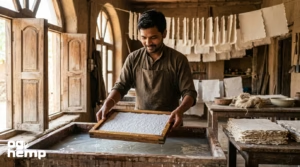
Hemp paper is significantly more sustainable and mechanically durable than tree-based paper because industrial hemp stalk bast fibers contain 65% to 85% cellulose content (compared to approximately 30% to 50% in virgin wood pulp), offering superior tensile modulus, tear resistance, and up to seven recycling lifespans without fiber breakdown.
Unlike commercial forestry which requires 20 to 50 years to mature timber crops, industrial hemp reaches full harvesting height in just 90 to 120 days. Producing virgin paper from hemp requires zero chlorine bleaching and drastically lower chemical and water inputs. When specified across commercial paper weights—ranging from 100 GSM stationery to 700 GSM rigid monocartons—hemp cardstocks provide the structural integrity required for luxury embossing, crisp foil stamping, and high-speed automatic folding line performance.
How do engineered natural-filled biocomposites and punched thin sheets solve the plastic dilemma?
Engineered natural-filled biocomposites solve the plastic dilemma by compounding biodegradable bio-polymers—such as Polyhydroxyalkanoates (PHA) and Polybutylene Succinate (Bio-PBS)—with natural hemp bast fibers, micro-hurds, and organic mineral fillers to create high-performance, close-to-nature materials engineered for certified compostability.
Rather than relying on brittle, expensive neat bioplastics, material science engineers reinforce biodegradable resins with 20% to 40% organic agricultural fillers and refined hemp fibers. This produces distinct commercial converting capabilities:
- Thin-Sheet Calendered & Punched Products: Biocomposite formulations can be extruded into ultra-consistent thin sheets that are precision stamped and die-cut. These punched components serve as rigid folding collars, divider cards, blister packaging backings, and protective retail hangtags, directly replacing thin PVC, PET, and polypropylene sheets with 100% soil-biodegradable alternatives.
- Engineered Design Biocomposites: For rigid 3D geometries, natural-filled biocomposites run smoothly on standard injection molding and thermoforming equipment. They provide high dimensional stability, elevated heat deflection temperatures (HDT > 100°C), and high impact strength for cosmetic jars, closures, caps, and electronic component housings.
- Authentic Close-to-Nature Aesthetics: The incorporation of natural plant fibers creates a refined matte surface with organic micro-fiber marbling, eliminating the synthetic visual and tactile feel of petroleum plastics while guaranteeing zero persistent microplastics upon degradation.
Why are molded hemp pulp inserts replacing petroleum-based foam trays?
Molded hemp pulp inserts are replacing petroleum-based foam trays because they are custom-engineered from renewable plant fibers using thermoformed wet-press molding, providing high impact shock absorption, zero-plastic compliance, and instant curbside paper recyclability.
For brands packaging luxury cosmetics, fragile glass bottles, and consumer electronics, sustainable molded pulp inserts provide smooth, dust-free surface finishes with custom-contoured cavity geometries that nest products securely during international transit.
| Material Class | Feedstock Origin | Mechanical & Barrier Profile | End-of-Life & Degradation | 2026 EPR Compliance |
|---|---|---|---|---|
| Hemp Bast Paperboard | 100% Tree-Free Bast Fiber (Annual Harvest) | High burst factor, 85% cellulose purity, crisp folding lines (100–700 GSM) | 100% Curbside Recyclable (7x cycles) & Home Compostable | ✔ Grade A Exemption (Zero Plastic Tax) |
| Engineered Natural Biocomposites | Bio-PBS / PHA + Hemp Fiber + Organic Fillers | High tensile modulus, HDT > 100°C, die-cut punched thin sheets & rigid 3D moldings | Soil & Home Compostable (EN 13432, TUV OK Compost) | ✔ Full Bio-Pass (Zero Microplastics) |
| Molded Plant Pulp Inserts | Industrial Hemp & Sugarcane Residues | Impact shock absorption, precision contours, smooth thermoformed finish | 100% Curbside Recyclable & Rapid Soil Biodegradable | ✔ Approved Replacement for EPS Foam |
| Fossil PE-Lined Board & Foam | Virgin Timber Pulp + Petroleum Polyethylene / Polystyrene | Standard water barrier but unseparable composite layers | Landfill Contaminant (Centuries to fragment into microplastics) | ✘ High EPR Penalties (>€800/Tonne Eco-Tax) |
How can global brands execute a successful packaging transition in 2026?
Global brands can execute a successful packaging transition in 2026 by conducting a comprehensive material stream audit, switching to mono-material paperboard packaging, adopting certified natural-filled biocomposites, and integrating verified Product Lifecycle Analysis (LCA) data across all supply chain documentation.
To ensure total compliance across domestic and international export markets, brands should execute a 4-stage packaging modernization roadmap:
- Conduct a Material & Barrier Audit: Identify all single-use poly coatings, foam trays, and non-recyclable multi-polymer laminates currently present in your secondary and primary packaging suites.
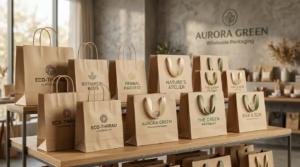
- Design for Mono-Material Circularity: Standardize product boxes on 100% uncoated or aqueous-coated hemp paperboard that can be placed directly into standard paper recycling streams without peeling liners.
- Implement Punched & Molded Bio-Inserts: Replace plastic thermoformed blisters and foam cradles with die-cut biocomposite thin sheets or molded hemp pulp trays that match exact product tolerances.
- Secure Auditable Chain-of-Custody Certification: Ensure your packaging partners provide verified Declarations of Conformity, Certificates of Origin (CoO), and ISO 14040/14044 compliant carbon and water footprint metrics for customs verification.
Frequently Asked Questions About the 2026 Packaging Shift & Biocomposites?
Home compostable packaging biodegrades naturally in ambient soil or backyard compost heaps at ambient temperatures (20°C–30°C) within 180 days, whereas industrially compostable materials require managed industrial facilities with sustained heat (58°C) and specific humidity to decompose.
Natural-filled biocomposites run seamlessly on standard injection molding and sheet extrusion equipment with minor barrel temperature adjustments, allowing manufacturers to produce die-cut thin sheets, closures, and rigid jars without investing in custom machinery.
EPR compliance for global packaging exports requires a formal Declaration of Conformity in local destination languages, verified Certificates of Origin (CoO) proving non-wood virgin fiber content, third-party compostability certificates (EN 13432 / ASTM D6400), and registration numbers with national Producer Responsibility Organizations (PROs).
Switching to hemp packaging significantly reduces Scope 3 carbon emissions because industrial hemp sequesters up to 15 tonnes of carbon dioxide per hectare during cultivation and requires significantly less fossil energy and chemical processing than tree-pulp or synthetic plastic manufacturing.
Die-cut punched biocomposite thin sheets replace thermoformed plastics by providing rigid, dimensionally stable folding collars, blister backings, and dividing cards calendered from Bio-PBS/PHA and natural plant fibers that disintegrate in soil without generating microplastics.
Non-recycled plastic taxes are calculated through eco-modulation fee schedules that levy direct tariffs—such as the EU’s €800 per metric tonne contribution—on packaging containing non-recyclable multi-layer plastics, while rewarding monomaterial paperboard with substantial fee rebates.
High-GSM hemp paperboard (300 to 700 GSM) excels on high-speed converting lines due to its high burst factor and dense bast fiber interlock, enabling sharp die-creasing, deep multi-level embossing, and clean hot foil stamping without cracking along fold lines.
Next-generation aqueous bio-coatings achieve oil and moisture resistance through plant-derived polymer dispersions and natural mineral barriers that create a dense hydrophobic matrix on paperboard without using toxic fluorochemicals (PFAS) or unrepulpable polyethylene liners.
📚 Authoritative Scientific References & Regulatory Directives
- Carbon Sequestration & Agronomy: Dr. Darshil Shah, Centre for Natural Material Innovation, University of Cambridge — Carbon accounting studies documenting up to 15 tonnes of atmospheric CO₂ sequestered per hectare of industrial hemp (*Cannabis sativa L.*).
- Fiber Morphology & Cellulose Chemistry: Technical Association of the Pulp and Paper Industry (TAPPI) — Standards T 205 & T 220 establishing hemp bast fiber tensile modulus and 7-cycle pulping endurance vs. wood fibers.
- EU Regulatory Framework: European Parliament and Council Regulation (EU) 2025/40 (Packaging and Packaging Waste Regulation – PPWR) & Council Decision (EU, Euratom) 2020/2053 establishing the €800/tonne non-recycled plastic packaging contribution.
- Thermomechanical Testing for Biocomposites: ASTM International — ASTM D648 / ISO 75 (Standard Test Method for Deflection Temperature of Plastics Under Flexural Load) benchmarking Bio-PBS and PHA reinforced natural fiber composites (HDT > 100°C).
- Compostability & Biodegradation Verification: European Standard EN 13432, ASTM D6400, and TÜV AUSTRIA OK Compost HOME testing methodologies for ambient soil disintegration and zero ecotoxicity.
- Lifecycle Assessment Standards: ISO 14040:2006 & ISO 14044:2006 (Environmental Management — Life Cycle Assessment — Principles and Framework).
Transition Your Packaging Suite to 100% Tree-Free & Plastic-Free Materials in 2026?
Request an OG Hemp 2026 B2B Material Sample Kit containing custom GSM hemp paperboards, die-cut punched biocomposite sheets, molded pulp trays, and complete EPR compliance documentation.