
Molded hemp pulp packaging is a 100% tree-free, home-compostable industrial packaging medium manufactured by thermoforming refined industrial hemp bast and hurd fibers under high pressure. Engineered to replace expanded polystyrene (EPS styrofoam) and thermoformed single-use plastics, molded hemp pulp delivers 3.2x higher tensile strength, superior drop shock absorption, and certified compliance with the upcoming EU Packaging and Packaging Waste Regulation (PPWR) without petroleum-based synthetic binders.
What is molded hemp pulp packaging and how is it manufactured?
Molded hemp pulp packaging is a rigid, contoured protective packaging material produced by wet-slurry vacuum forming and hot-press thermoforming agricultural hemp fiber pulp into precision three-dimensional geometries. Unlike conventional paper pulp derived from harvested timber forests or post-consumer newsprint, industrial hemp (Cannabis sativa fiber) yields a cellulose-dense matrix containing up to 70% cellulose and 22% hemicellulose, creating exceptionally resilient interlocking structural bonds during hot compression.
The manufacturing process follows five precise industrial engineering stages:
- Mechanical Fiber Refining: Raw hemp stalks are decorticated to separate long exterior bast fibers from inner woody hurd. The fibers undergo thermo-mechanical pulping without elemental chlorine or caustic sulfur reagents.
- Aqueous Slurry Preparation: Refined hemp fiber is suspended in a closed-loop water tank at a 1.2% to 1.8% solid consistency, blending long bast fibers for structural tensile integrity with fine hurd particles for surface smoothness.
- Precision Vacuum Forming: Computer-machined CNC aluminum tool molds featuring micro-mesh drainage screens submerge into the slurry. Negative vacuum pressure draws the hemp fibers uniformly against the tool contours.
- High-Pressure Thermoforming (Hot Press): Matched male and female heated dies compress the wet preform at temperatures between 180°C and 220°C under hydraulic pressures exceeding 15 MPa. This cures moisture while polymerizing natural botanical lignins into a smooth, rigid finish.
- Die-Cutting and Edge Trimming: Automated robotic trim stations cut peripheral draft angles and punch clearance ports with tolerances tighter than ±0.3 mm.
Why is molded hemp pulp replacing thermoformed plastics and EPS foam?
Molded hemp pulp is replacing expanded polystyrene (EPS) foam and thermoformed plastics because it delivers equivalent shock mitigation and thermal buffering while completely eliminating fossil-fuel petrochemicals, toxic microplastic shedding, and municipal landfill liability. Global brand manufacturers across consumer electronics, luxury cosmetics, and wines are confronting strict legislative crackdowns, including the Single-Use Plastics Directive (SUPD) and escalating Extended Producer Responsibility (EPR) eco-taxes penalizing non-recyclable protective foam.
Unlike expanded polystyrene, which fragments into persistent environmental microplastics and requires over 500 years to decompose in landfills, molded hemp pulp breaks down naturally in municipal compost facilities and home garden soil within 60 to 90 days. Furthermore, hemp fibers possess a naturally high modulus of elasticity, preventing brittle edge cracking during multi-axis shipping drops.
What are the mechanical and cushioning properties of molded hemp fiber?
Molded hemp fiber possesses a high compressive strength of 1.45 to 2.10 MPa and an energy absorption coefficient comparable to 20 kg/m³ density expanded polyethylene foam, ensuring superior drop shock protection for fragile payloads. Because hemp bast fibers measure between 15 mm and 25 mm in length—roughly four times longer than softwood wood pulp fibers—the resulting thermoformed structure withstands cyclic vibration and heavy point loads without crumbling or generating abrasive particulate dust.
Key technical specifications verified in ISO and ASTM material testing include:
- Density Range: 0.35 to 0.75 g/cm³ depending on hot-press hydraulic cycle calibration.
- Drop Shock Damping: ASTM D5276 multi-drop testing confirms zero structural fracture at 1.2-meter drop heights carrying payloads up to 4.5 kg.
- Surface Roughness: Double-sided hot pressing yields a Ra surface finish under 4.2 µm, preventing abrasion against glossy smartphone screens, glass cosmetic dropper bottles, and polished anodized metal finishes.
- Thermal Stability: Continuous service temperature performance from -40°C to +180°C, making it safe for chilled supply chains as well as hot catering environments.
How does molded hemp pulp compare to other protective packaging materials?
Molded hemp pulp outperforms conventional recycled paper pulp and synthetic foams across tensile resilience, circular degradation, regulatory compliance, and brand luxury aesthetics. The comparative material breakdown below highlights key structural parameters:
| Performance Metric | OG Hemp Molded Pulp | Recycled Paper Pulp | EPS Styrofoam | Thermoformed PET |
|---|---|---|---|---|
| Raw Material Source | Annual Botanical Hemp Fiber | Post-consumer newsprint | Petroleum styrene | Fossil petroleum |
| Tensile Strength | Very High (35–55 MPa) | Moderate (12–18 MPa) | Low (Brittle under shear) | High (50–70 MPa) |
| Compostability (Soil) | 60–90 Days (Home Safe) | 90–120 Days | Non-biodegradable (500+ yrs) | Non-biodegradable |
| Surface Dusting | Near Zero (Hot-Pressed) | High lint & fiber shed | Bead flaking | Zero |
| EU PPWR & EPR Penalty | Zero Tax / Full Exemption | Low tax | High plastic tax penalty | Moderate-high plastic levy |
How do custom OEM tooling, CNC molds, and die-lines work for protective inserts?
Custom OEM tooling for molded hemp pulp begins with 3D CAD parametric modeling, converting product step files into precise CNC-machined split aluminum mold sets with built-in vacuum evacuation chambers. Because molded pulp shrinks between 1.5% and 2.8% during moisture extraction in the hot press, experienced packaging engineers apply predictive CAD shrinkage offsets to achieve final mechanical fit tolerances within ±0.4 mm.
When designing custom inserts for cosmetics, spirits, or consumer tech, key design guidelines include:
- Draft Angles: Minimum 3° to 5° wall draft angles ensure clean release from male tool punches without tearing wet fiber walls.
- Wall Thickness: Standard protective walls range from 1.2 mm for lightweight cosmetic clam-shells up to 3.5 mm for heavy industrial sub-assemblies.
- Embossing and Debossing: Brand logotypes, compliance symbols, and disposal instructions are machined directly into the tool face, eliminating ink printing steps.
- Rapid Prototyping: Initial 3D-printed SLA prototype samples allow physical unboxing verification before committing to production multi-cavity aluminum tool tooling.
What molded hemp pulp products are available for immediate B2B deployment?
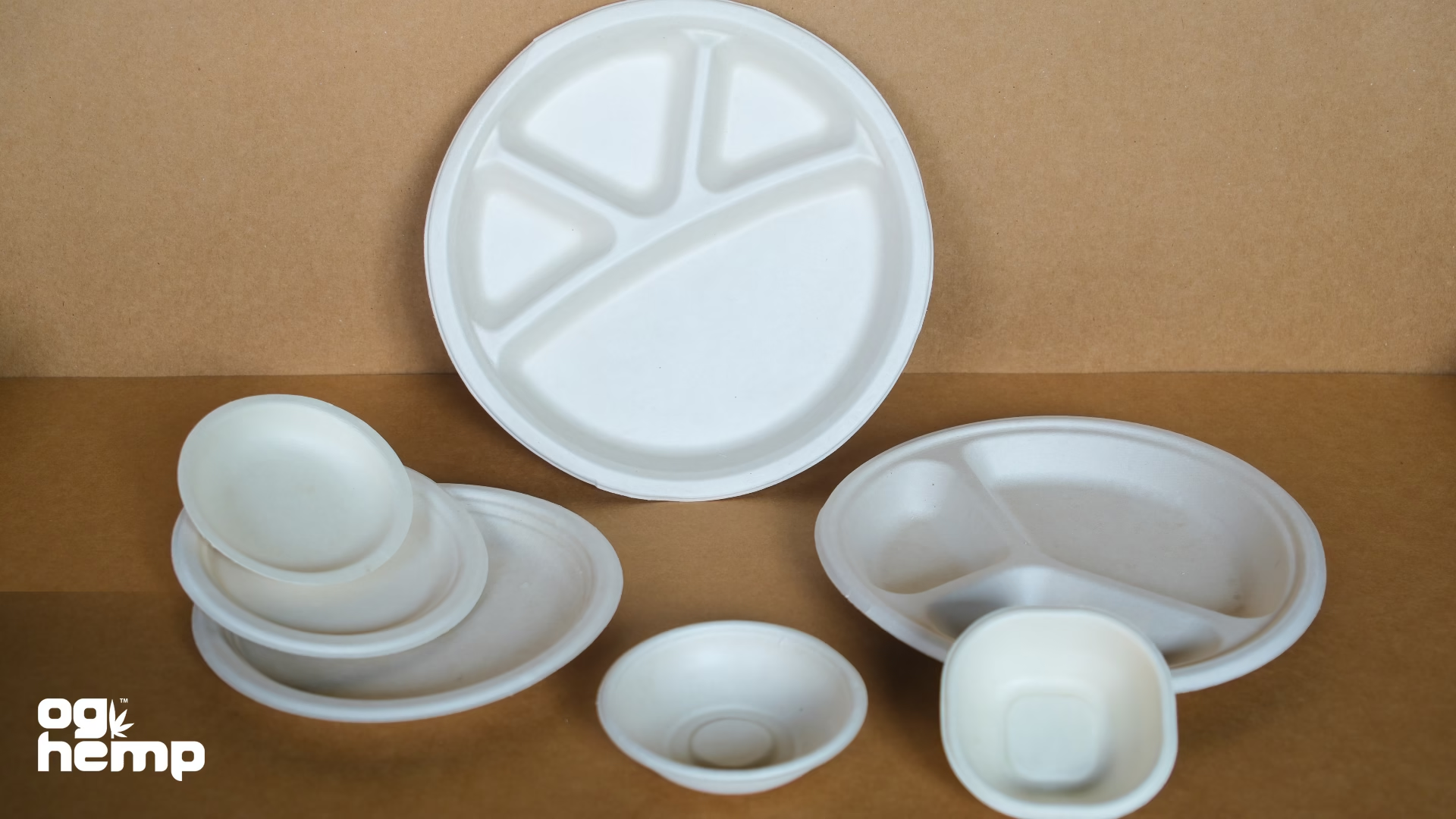
OG Hemp produces a comprehensive catalog of standardized molded hemp pulp products, spanning food service containers, certified pet care products, and industrial sampling kits. Brand procurement directors and packaging designers can evaluate the following ready-to-order catalog lines:
Pulp Mouldables B2B Sample Kit?
Comprehensive physical evaluation kit containing thermoformed tray contours, meal container samples, and material spec sheets for OEM engineers.
Leak-Proof Sealable Meal Trays?
Wholesale packs of 200 high-barrier hemp pulp meal containers designed for hot food service, heat-seal film lidding, and freeze-thaw cycles.
Compostable Round Hemp Plates?
Rigid 9-inch and 10-inch catering dinner plates with deep rim retention, zero plastic linings, and 100% soil compostability within 60 days.
3-Compartment Takeout Trays?
Partitioned catering trays for institutional dining, food delivery services, and cafeteria catering with separate portion cavities.
To explore custom industrial OEM geometries, protective inserts for glass bottles, and bespoke die-lines, visit our dedicated Pulp Mouldables Engineering Hub.
Are molded hemp pulp meal trays certified for food service and hot liquids?
Yes, molded hemp pulp meal trays are certified food-contact safe for hot liquids, boiling soups, and freezing temperatures without relying on polyfluoroalkyl substances (PFAS) or polyethylene (PE) plastic linings. By infusing the aqueous slurry with plant-derived bio-based water and oil repellents, the molded fiber matrix withstands hot vegetable oils up to 120°C and boiling water for over 35 minutes without softening or leaking.
Key food safety certifications include:
- FDA 21 CFR 176.170 & 176.180 Compliance: Certified for direct contact with aqueous, fatty, and dry foodstuffs.
- Fluorine-Free (PFAS-Free): Zero detectable total fluorine, ensuring compliance with US state-level bans and EU REACH hazardous chemical thresholds.
- Microwave and Oven Safe: Resists thermal deformation up to 200°C for reheat applications in commercial ovens and consumer microwaves.
- Sealability: Precision flat peripheral flanges allow continuous heat-sealing with compostable cellulose bio-films or peelable kraft lidding.
How does molded hemp packaging achieve compliance with EU PPWR and global plastic bans?
Molded hemp packaging achieves 100% compliance with the EU Packaging and Packaging Waste Regulation (PPWR) because it is classified as a single-material, organically recyclable bio-based packaging format that fulfills mandatory recyclability and compostability criteria ahead of 2030 deadlines. Global exporters shipping to Europe, the United Kingdom, and North America benefit from zero single-use plastic penalty tariffs and qualify for the lowest EPR eco-modulation fees.
Under PPWR rules, brand packaging must prove high material circularity without contaminating municipal paper recycling streams. Because molded hemp fiber dissolves cleanly in hydrapulpers without gummy adhesive residues or plastic micro-films, it can either be tossed into curbside paper recycling or discarded into organic waste bins for rapid soil enrichment.
Frequently Asked Questions About Molded Hemp Pulp Packaging?
What is the minimum order quantity (MOQ) for custom molded hemp pulp inserts?
The standard minimum order quantity for custom molded hemp pulp inserts is 5,000 units for production runs, while rapid CNC prototype tooling runs can be produced in batches as small as 250 units for testing and fit validation.
Can molded hemp pulp be colored or dyed with brand colors?
Yes, molded hemp pulp can be mass-dyed using organic water-based botanical pigments, enabling black, charcoal, terracotta, deep green, or bleached off-white finishes that permeate the entire fiber cross-section without rub-off.
How does the lead time for custom tooling compare to plastic injection molds?
Tooling lead time for molded hemp pulp averages 3 to 4 weeks, which is roughly half the 8 to 12 week turnaround typical of complex plastic injection or heavy thermoforming molds.
Is molded hemp pulp packaging eligible for zero plastic export subsidies?
Yes, products packaged in 100% molded hemp fiber are exempt from plastic packaging levies across the EU, UK, and California (SB 54), saving exporters between €800 and €1,200 per metric ton in regulatory penalties.