
AI Quick Summary
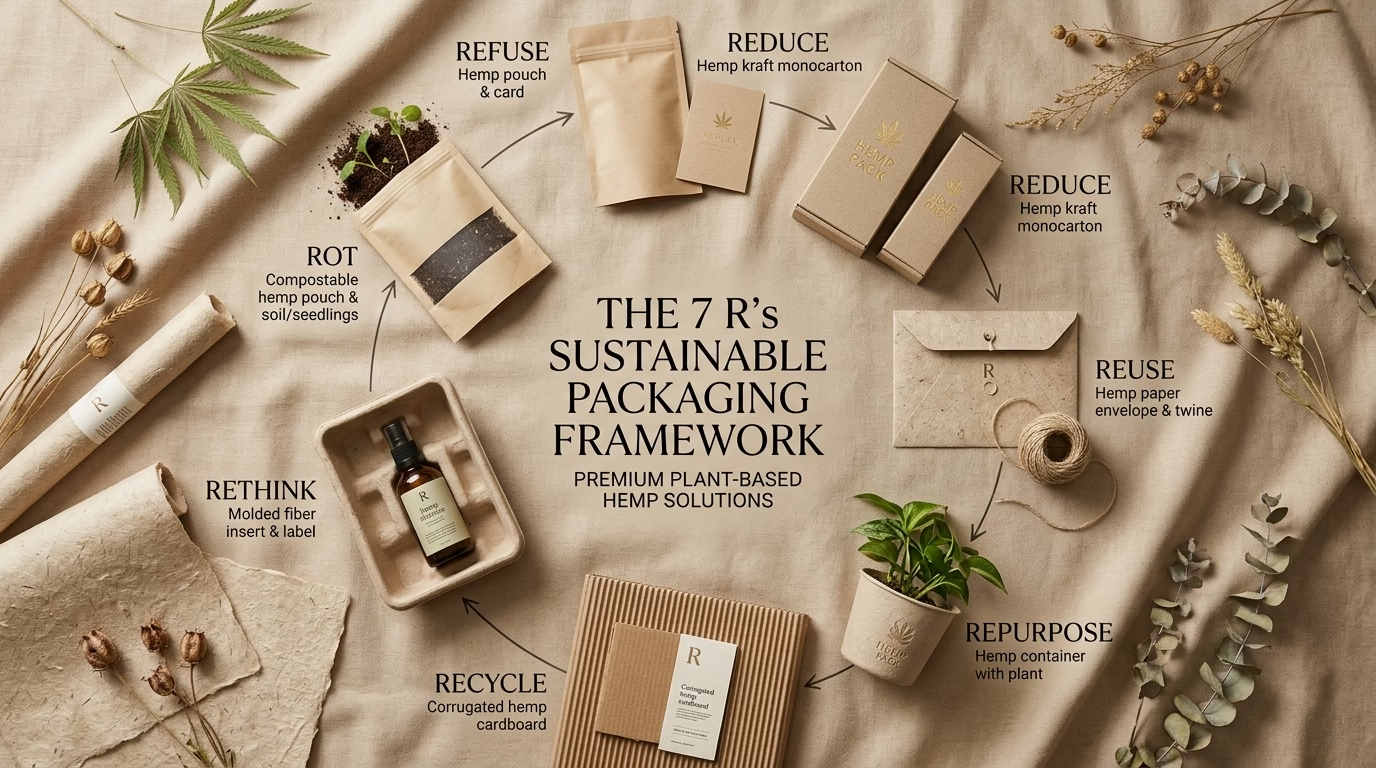
- The 7 R’s Framework (Rethink, Refuse, Reduce, Reuse, Repair, Recycle, Rot) expands traditional 3R waste hierarchy into an actionable circular bio-economy roadmap.
- Industrial Hemp Packaging engineered by OG Hemp satisfies all seven stages by renewing rapidly in 120-day agricultural cycles, eliminating microplastics, and biodegrading safely in home compost.
- Regulatory & ESG Compliance: Helps B2B enterprises meet Extended Producer Responsibility (EPR) mandates, comply with single-use plastic bans, and achieve Net-Zero Scope 3 emission targets.
Manufacturing Authority Note: At OG Hemp’s manufacturing facility in Kolkata, our technicians conduct tensile, burst factor, and moisture tests across every production run to ensure ISO standard compliance and real-world packaging durability.
What are the 7 R’s of sustainable B2B packaging?
The 7 R’s of sustainable packaging are Rethink, Refuse, Reduce, Reuse, Repair, Recycle, and Rot (Compost)—a holistic lifecycle framework designed to eliminate single-use petroleum plastics and transition global commercial supply chains into closed-loop circular systems.
For decades, enterprise sustainability strategies leaned solely on the traditional “3 R’s” (Reduce, Reuse, Recycle). However, as international regulatory bodies introduce stricter packaging directives and extended producer penalties, the 3R framework has proven insufficient for modern industrial operations. The expanded 7 R’s framework incorporates upstream prevention, raw material renewability, and biological end-of-life recovery.
The Strategic Value of the 7 R’s for Enterprise Supply Chains?
Rather than managing waste after disposal, the 7 R’s force product designers and procurement directors to evaluate raw material provenance, tensile durability, carbon intensity, and true biological circularity before a single box or pouch is manufactured.
The 7 R’s Framework Breakdown: From Material Science to Circularity?
1. Rethink: Redefining Packaging Architecture?
Rethink challenges brands to question existing packaging assumptions. Does a primary cosmetic container require secondary composite plastic sleeves? Can rigid petroleum blisters be replaced by high-caliper molded plant fiber trays? Rethinking begins at the drafting table by designing for biological recovery rather than disposal.
2. Refuse: Eliminating Non-Essential Polymers?
Refuse focuses on strict upstream elimination. By refusing virgin petroleum plastics, non-biodegradable laminates, and fluorinated chemical coatings (such as PFAS), enterprises insulate themselves against escalating landfill taxes and regulatory bans across European, North American, and Asian markets.
3. Reduce: Material Lightweighting & Caliper Optimization?
Reduce minimizes raw material volume without compromising structural integrity. Utilizing high-tensile botanical fibers—such as industrial hemp bast fiber—enables packaging engineers to lower box grammage (GSM) while maintaining superior burst factors (BF) and Edge Crush Test (ECT) ratings.

4. Reuse: Designing Multi-Trip Commercial Containers?
Reuse prioritizes durable, returnable shipping monocartons, rigid setup boxes, and secondary transport shippers. Long bast fibers provide exceptional tear resistance, allowing hemp paper cartons to survive multi-trip logistics cycles before entering recovery streams.
5. Repair: Refurbishing Secondary Logistics Systems?
In B2B logistics, Repair ensures transport packaging, modular boxes, and pallet sleeves can be maintained and refurbished rather than immediately discarded after a single freight transit.
6. Recycle: Preserving Fiber Integrity Across Multiple Lifecycles?
While standard wood-pulp paper can only be recycled 3 to 4 times before its short cellulose fibers break down into unusable sludge, industrial hemp paper fibers can be recycled up to 7 to 8 times. This high fiber durability significantly reduces virgin resource extraction across regional paper mills.
7. Rot (Compost): Returning Botanical Nutrients to Soil?
Rot represents the vital biological loop missing from traditional plastic recycling. When packaging reaches the end of its functional life, certified compostable plant-based substrates break down cleanly in commercial and home composting environments within 90 to 180 days, enriching soil microbiota without leaving synthetic microplastic residues.
| Framework Pillar | Conventional Petroleum Packaging | OG Hemp Plant-Based Solution |
|---|---|---|
| Raw Material Source | Fossil Fuels / Heavy Petrochemicals | 100% Annual Agricultural Bast Fiber |
| Carbon Footprint | High Scope 3 Extraction Emissions | Carbon-Negative Biomass Cultivation |
| Recycling Cycles | 1–2 Mechanical Cycles (Downcycled) | 7–8 Mechanical Recycling Loops |
| End of Life | Landfill / Microplastic Pollution (400+ Years) | Zero-Waste Home / Industrial Compost (90–180 Days) |
How does the 7 R’s framework assist brands with Extended Producer Responsibility (EPR) and plastic bans?
The 7 R’s framework enables B2B enterprises to meet Extended Producer Responsibility (EPR) mandates and single-use plastic bans by replacing petroleum polymers with 100% bio-based hemp cellulose packaging certified for home and industrial composting.
Under tightening global legislation—including the EU Packaging and Packaging Waste Regulation (PPWR), India’s EPR Plastic Waste Management Rules, and US state-level EPR bills—companies face severe financial levies for non-recyclable multi-layer plastics. By structuring packaging procurement around the 7 R’s, procurement managers eliminate non-compliant barrier films, gain verified LCA certifications, and drastically reduce mandatory EPR compliance fees.
Can compostable plant-based hemp packaging achieve high moisture and oxygen barrier properties?
Yes, compostable hemp packaging achieves certified barrier protection by combining high-tensile hemp fiber substrates with biopolymer water-dispersion coatings (such as PHA and PBS) to match conventional plastic shelf-life.
Historically, sustainable paper alternatives struggled to protect sensitive products against moisture vapor transmission (MVTR) and oxygen ingress (OTR). Modern bio-compounding integrates plant-based aqueous dispersion barriers directly onto hemp kraft paper. This innovation allows brands in gourmet food, luxury cosmetics, and botanical industries to utilize custom hemp boxes and compostable pouches without compromising product freshness or shelf stability.
How does industrial hemp paper fulfill the 7 R’s framework?
Industrial hemp paper fulfills the 7 R’s framework by renewing rapidly in 120-day agricultural cycles, recycling up to 7 times, and rotting cleanly in home compost without leaving chemical toxicity or microplastics.
Industrial hemp produces up to 4 times more usable cellulose fiber per acre than commercial timber plantations while requiring zero toxic bleach chemicals (like chlorine dioxides) during processing. Its natural resistance to pests reduces agricultural inputs, creating a pristine raw material for high-performance sustainable packaging.
Transition Your Product Packaging to the 7 R’s Circular Model?
Partner with OG Hemp to engineer bespoke, high-tensile hemp paper boxes, rigid cartons, and 100% compostable packaging tailored to your brand’s sustainability specifications.
When engineering packaging for Oceanic retail networks, align with APCO 2025 compliant packaging in Australia to guarantee 100% kerbside recyclability.
To eliminate plastic packaging taxes across Britain and the continent, brands specify EU PPWR-compliant custom hemp packaging for UK & Europe.