AI Quick Takeaways
- Handmade paper envelopes for wedding stationery provide unmatched tactile luxury, organic feathered deckle edges, and 100+ year archival durability.
- Optimal liner paper weight: 80 GSM to 120 GSM lightweight handmade hemp or seed paper is the golden standard for envelope liners, ensuring smooth folding without adding bulky thickness.
- Flap geometry: Deep Euro-flaps and organic contour deckled flaps highlight bespoke liner artwork and botanical patterns upon unboxing.
- Adhesion best practice: Double-sided acid-free archival tape runners prevent moisture wrinkles and cockling compared to liquid wet glue.
- 100% tree-free sustainability: Hand-pulled from annual agricultural hemp bast fibers with zero chlorine bleaches or synthetic sizing.
Why are handmade paper envelopes and custom liners essential for luxury wedding stationery suites?
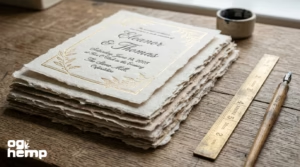
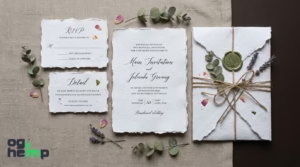
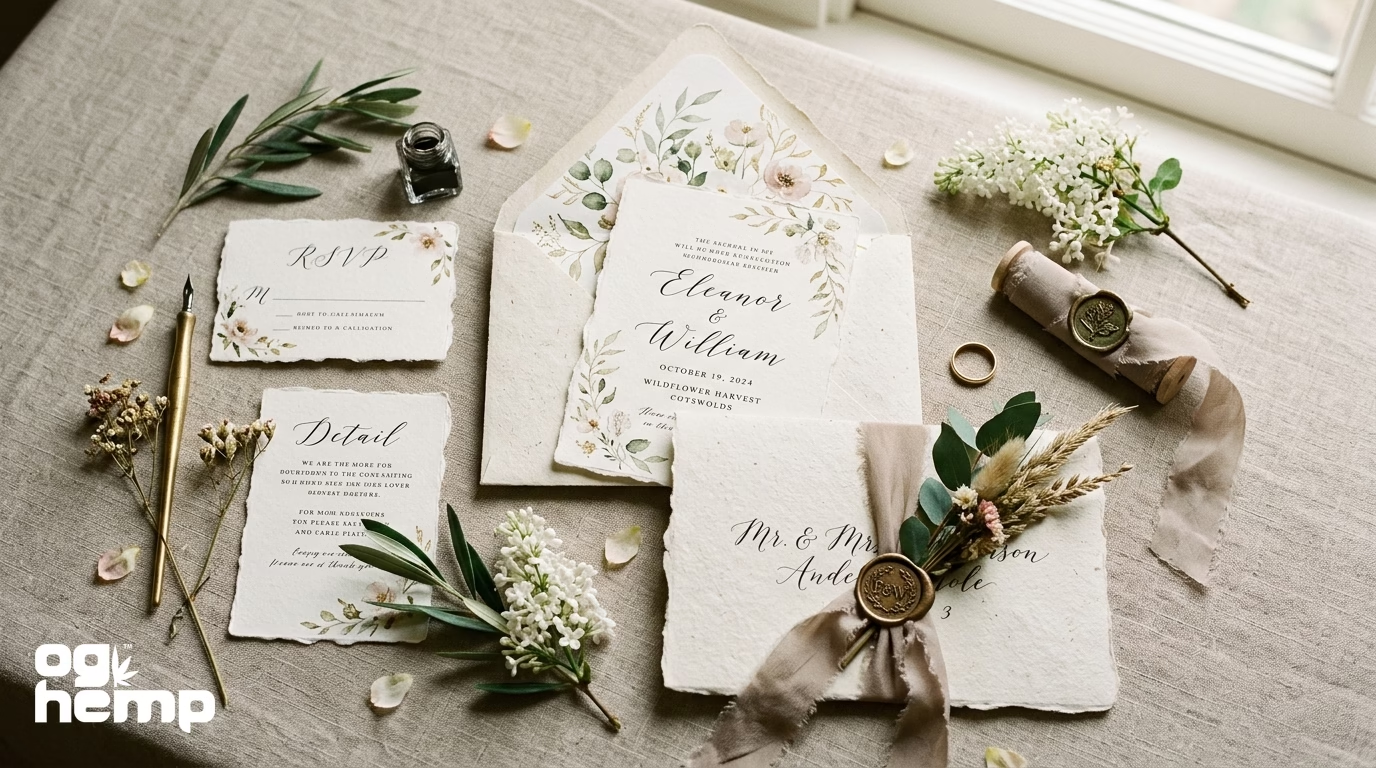
Handmade paper envelopes and custom liners are essential for luxury wedding stationery because they transform the initial invitation unboxing into an immersive, multi-sensory heirloom experience. While mass-manufactured commercial envelopes feel rigid and utilitarian, handmade deckle edge paper envelopes feature soft, hand-torn feathered borders, subtle botanical deckles, and rich fiber textures. When an invited guest breaks a custom wax seal and lifts the flap, a tailored inner liner—whether adorned with botanical watercolors, custom monograms, or petal-embedded handmade paper—protects the inner invitation cards while framing the suite in curated artisanal luxury. Furthermore, pure hemp fiber envelopes deliver archival chemical stability, resisting acid discoloration and degradation across decades of keepsake storage.
What paper weight is best for handmade envelope liners in wedding stationery?
The best paper weight for handmade envelope liners is between 80 GSM and 120 GSM because it provides crisp opacity and print clarity while flexing effortlessly along the envelope crease line. Using cardstock exceeding 150 GSM causes the envelope flap to spring open, creates unsightly fold cracks, and adds unnecessary bulk that increases international postal tariffs. Conversely, paper below 70 GSM risks tearing during assembly and allows adhesive bleed-through. In our comprehensive guide to paper GSM weights from 100 to 700 GSM, 100 GSM hemp text paper emerges as the ideal sweet spot—delivering superior tensile fold endurance, botanical inclusions, and effortless scoring.
Recommended liner paper selections include:
- 80–100 GSM Raw Unbleached Hemp Paper: Earthy, warm ivory texture with visible bast fibers that pairs organically with vintage and botanical wedding themes.
- 100 GSM Plantable Seed Paper Liners: Embedded with non-GMO wildflower seeds, allowing guests to plant the liner after the celebration into blooming forget-me-nots or marigolds.
- 110–120 GSM Fine Botanical Art Paper: Smooth, internally sized surface calibrated for vibrant full-color giclée floral prints, crests, and venue illustrations.
- 90 GSM Golden Fleck Deckle Liner: Infused with subtle mica or recycled straw fibers for evening gala and black-tie wedding stationery.
How do Euro-flap, square-flap, and deckle-contour envelopes compare for wedding suites?
Euro-flap and deckle-contour envelopes provide the deepest visual canvas for showcasing liners, whereas square-flap envelopes offer a minimalist, modern architectural silhouette. Selecting the right flap geometry determines both the aesthetic reveal of your inner artwork and the ease of applying custom wax seals or ribbon ties. For deeper insight into complete suites, explore our master guide on handmade hemp deckle edge paper for manuscripts and luxury stationery.
Deep Euro-Flap Envelopes?
Profile: Elegant, dramatic V-shaped triangular flap extending halfway down the envelope back.
Liner Reveal: Maximizes visible surface area for custom venue maps, monogram crests, and botanical patterns.
Best Paired With: Oval or round botanical wax seals, formal calligraphy addressing, and deckle wedding suites.
Organic Deckled Contour Flaps?
Profile: Four-sided natural feathered deckle edges hand-formed directly on the papermaking mould.
Liner Reveal: The liner sits recessed 5mm to 8mm below the feathered edge, creating a romantic double-border frame.
Best Paired With: Raw silk ribbons, twine wraps, deckled place cards, and heirloom calligraphy.
Straight Square-Flap Envelopes?
Profile: Clean, rectangular flap with modern 90-degree lines.
Liner Reveal: Crisp horizontal reveal suited for geometric patterns, typographic quotes, or solid color blocking.
Best Paired With: Contemporary minimalist weddings, architectural typography, and blind deboss monograms.
What standard envelope sizes should wedding stationers select for custom suites?
Wedding stationers should primarily select A7 (5.25 x 7.25 inches) for main 5×7 invitation cards, A1 or 4-Bar for RSVP response cards, and A9 or Outer A7+ for multi-card nested suites. Ensuring precise dimensional tolerances between your invitation cards, enclosure liners, and envelopes prevents cards from jamming during insertion while meeting international postal sorting standards.
- 100% Tree-Free Bast Hemp Fiber (Naturally Acid-Free)
- Custom Hand-Torn Deckle or Precision Euro-Flaps
- 180–250 GSM Outer Envelope Heavyweight Rigidity
- Zero Bleed with Dip Pen Inks & Waterproof Calligraphy
- Compostable & Biodegradable within 90 Days
- Wood Pulp Contains Lignin (Becomes Yellow & Brittle)
- Machine-Cut Sharp Edges Lacking Artisanal Character
- Thin 100–120 GSM Paper Prone to Bending & Translucency
- Feathers Badly When Inked with Pointed Calligraphy Nibs
- Bleached with Toxic Chlorine Chemicals
How do you make and install custom handmade envelope liners step-by-step?
To make and install custom envelope liners, create an exact template 1/8-inch narrower than the envelope cavity, apply archival dry tape along the liner flap perimeter, slide the liner beneath the gum line, and crease smoothly along the envelope fold. Following this standardized professional method ensures zero glue warping, wrinkle-free flap closure, and uniform positioning across hundreds of invitation suites.
Follow these 5 professional steps:
- Step 1 — Create Your Sizing Template: Trace your envelope flap onto rigid cardboard. Trim 1/8 inch (3mm) off the outer edges and bottom, ensuring the template ends just below the envelope’s natural fold line.
- Step 2 — Precision Cut the 80–120 GSM Liner Stock: Using an acrylic rotary cutter or laser cutter, trim your botanical hemp or custom-printed liner sheets to match the template.
- Step 3 — Apply Archival Adhesive: Apply acid-free double-sided adhesive tape runner strictly along the top angled edges of the liner flap. Crucial tip: Never apply adhesive to the lower rectangular body of the liner; allowing the bottom to float freely prevents buckling when the envelope is closed.
- Step 4 — Insertion & Alignment: Slide the liner completely into the envelope cavity. Center it so an equal 1/8-inch border of handmade deckle paper frames the liner.
- Step 5 — Fold & Bone-Score: Slowly fold the envelope flap downward. Press firmly along the flap crease with a smooth bone folder to activate the adhesive without wrinkling the delicate fibers.
Why should wedding stationers avoid liquid glue when assembling envelope liners?
Wedding stationers should strictly avoid liquid glue because moisture from liquid adhesives cockles handmade paper fibers, causes noticeable bubbling, and can seep through to the outer envelope face. Natural bast fibers in handmade hemp paper are highly absorbent. When liquid water-based glue is applied, the paper fibers swell unevenly, producing wavy distortions upon drying. Instead, professionals exclusively utilize archival pressure-sensitive double-sided tape runners, dry mounting film, or micro-dot adhesive rollers that bond instantly without moisture.
How do you pair handmade envelopes with botanical wax seals, silk ribbons, and calligraphy?
Pair handmade envelopes with botanical wax seals and silk ribbons by wrapping hand-dyed bias-cut silk ribbon around the suite, sealing the crossing point with flexible resin-based wax, and executing guest addresses with waterproof acrylic or iron gall calligraphy inks. The rich texture of handmade hemp paper anchors wax seals securely, eliminating the risk of seals popping off during transit. When addressing envelopes, the internal botanical sizing of OG Hemp paper guarantees zero feathering or bleeding, even when using ultra-sharp pointed dip pens and metallic gouache.
Explore our complete landing page on handmade deckle edge paper and wedding suites or review the best GSM for wedding invitation cards guide to match card thicknesses seamlessly.
Where can wedding planners and stationers source wholesale handmade paper envelopes in bulk?
Wedding planners and luxury stationery designers can source wholesale handmade hemp deckle envelopes directly from OG Hemp with custom dimensions, bespoke liner printing, and worldwide delivery. We provide tailored manufacturing for wedding invitation ateliers across North America, Europe, Australia, and India, offering low minimum order quantities, custom deckle contours, and pre-cut botanical liner sheets. Planners can request our curated sustainable paper sample kit to experience our weights, textures, and calligraphy sizing firsthand.
Our production adheres strictly to circular economy standards and sustainable waste protocols such as the EU Packaging and Packaging Waste Regulation (PPWR) and the Single-Use Plastics Directive (SUPD).
Frequently Asked Questions About Handmade Paper Envelopes & Liners?
Can handmade paper envelopes with liners be mailed through standard post?
Yes, handmade paper envelopes with liners can be mailed through standard postal services provided they meet standard postal dimensions, maintain uniform thickness under 0.25 inches, and use permanent adhesive on address labels or clear calligraphy. Because handmade deckle envelopes have soft edges, many wedding planners opt for postal “hand-cancelling” at the local post office to prevent automated high-speed sorting rollers from scuffing wax seals or tearing delicate deckles.
What is the difference between an unlined envelope and a lined envelope?
The difference between an unlined and lined envelope is that a lined envelope features an interior layer of paper that provides 100% opacity against light, protects invitation cards from dust, and adds a decorative artistic reveal upon opening. Unlined envelopes are lighter and more economical, but lightweight unlined papers may allow sensitive invitation details to show through when held up to direct light.
How much clearance is needed between the envelope and inner invitation card?
A standard clearance of 1/8 inch to 1/4 inch (3mm to 6mm) in both width and height is required between the inner invitation card and the outer envelope cavity. For example, a standard 5 x 7 inch invitation card pairs ideally with an A7 envelope measuring 5.25 x 7.25 inches. If adding thick envelope liners, silk ribbons, or wax seals, opting for 1/4-inch clearance ensures smooth card insertion without catching on the liner edges.
Can you print custom designs directly onto handmade envelope liners?
Yes, custom designs including botanical artwork, venue sketches, and monograms can be printed directly onto 100 GSM handmade hemp liners using high-resolution digital inkjet or letterpress printing. Because OG Hemp paper is internally sized, inks remain crisp and vibrant without blurring or feathering across the botanical fibers.
How do you address dark or textured handmade deckle envelopes?
Dark or textured handmade deckle envelopes are best addressed using opaque white, gold, or copper calligraphy inks, metallic gouache, or custom printed wrap-around address bands. High-pigment inks such as Bleed Proof White or metallic calligraphy gouache sit cleanly on the surface of raw hemp paper, delivering luminous contrast and legibility for postal delivery scanners.