
Why the Original 3 R’s Are No Longer Enough
For many years, Reduce, Reuse, Recycle has served as the foundation of environmental responsibility. It helped shift public awareness and encouraged better waste handling practices. However, this framework was shaped in a time when material systems were simpler and consumption patterns less intensive. Today, in the era of compostable packaging, those assumptions no longer hold.
Packaging volumes have increased significantly, driven by urbanization, e-commerce, and the demand for convenience. While recycling remains important, it addresses waste only after it has already been created. In practice, recycling systems struggle with contamination, mixed materials, and economic limitations, especially when dealing with complex packaging formats. As a result, a large share of discarded packaging continues to end up in landfills or the natural environment.
At the same time, governments, industries, and financial systems are aligning around net-zero goals. This has shifted attention from downstream waste management to upstream decision-making. The question is no longer only how materials are disposed of, but how they are designed, sourced, and used from the beginning. This shift has given rise to an expanded approach known as the 7 R’s, which builds on the original framework by adding Rethink, Refuse, Repurpose, and Rot. Together, these principles emphasize prevention, material intelligence, and alignment with natural cycles rather than reliance on recycling alone.
Real-World Problem: Materials at the Center of the Waste Crisis
Packaging accounts for a significant share of global municipal solid waste, with single-use materials dominating disposal streams. Plastic-based packaging, in particular, presents ongoing challenges. Many formats are difficult to recycle due to layered structures, coatings, and additives. Even when collected, much of this material is downcycled into lower-value applications, limiting its ability to circulate within the economy.
Beyond waste volume, material choice has direct implications for climate impact. Conventional packaging made from fossil-based resources carries a high carbon footprint across its lifecycle, from extraction and processing to disposal. Once landfilled or incinerated, these materials contribute emissions without offering pathways for regeneration or recovery.
This reality has brought increased attention to plant-based and fiber-derived alternatives such as paper packaging, molded fiber, biopulp, and composite materials produced from agricultural residues. These materials rely on renewable feedstocks and offer more predictable end-of-life pathways through recycling or composting. When designed correctly, they can reduce dependence on fossil resources and support circular material flows.
The effectiveness of these alternatives depends not only on the material itself, but on how it is integrated into broader systems of use, recovery, and disposal. This is where the expanded 7 R’s framework becomes particularly relevant. By focusing on material selection, design intent, and biological return, it provides a more practical response to the interconnected challenges of waste, climate impact, and resource use in modern packaging systems.
Rethinking Materials: Why Plant-Based Alternatives Matter
Material choice sits at the center of sustainable packaging. While improvements in recycling and waste collection remain important, they cannot fully address the environmental impact of packaging if the underlying materials are not designed for circularity from the outset. This has led to growing interest in plant-based alternatives that are derived from renewable sources and aligned with biological systems.
Paper and fiber-based packaging continue to play a foundational role due to their established recycling infrastructure and relatively low environmental footprint when sourced responsibly. 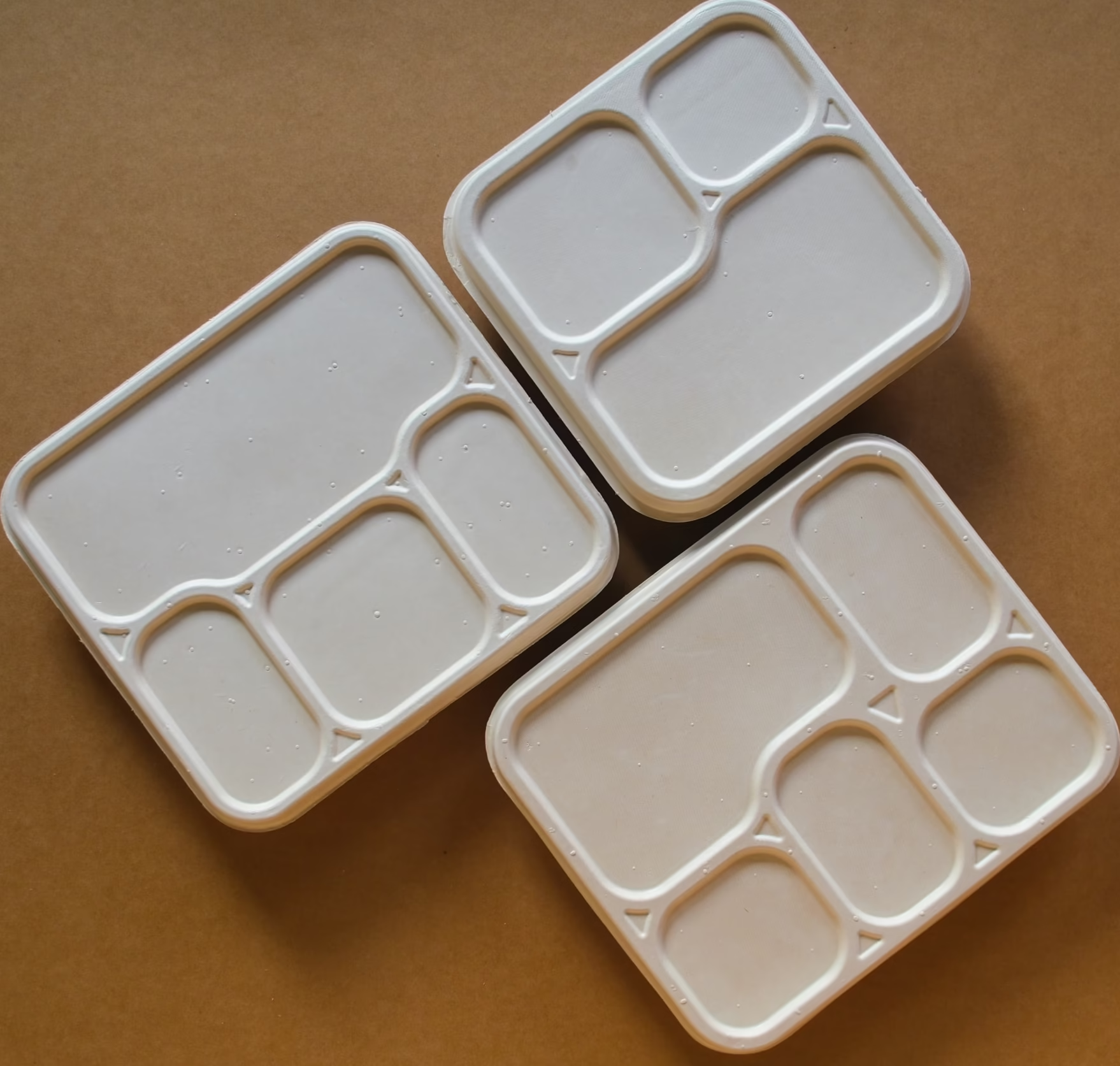 Building on this foundation, newer material categories such as molded fiber, biopulp, and fiber-based composite materials are expanding what plant-derived packaging can achieve. These materials are increasingly used in applications that once relied heavily on plastics, including protective packaging, food service items, and consumer goods packaging.
One of the key advantages of plant-based materials is their origin. Unlike fossil-based plastics, which introduce new carbon into the atmosphere, plant-derived materials are made from biomass that absorbs carbon during growth. When managed responsibly, this creates a shorter and more balanced carbon cycle. In addition, many of these materials can be designed to return safely to the environment through composting or to re-enter material loops through recycling.
End-of-life outcomes are especially important. Packaging that appears sustainable in use can lose its advantage if it cannot be effectively recovered or processed after disposal. Plant-based packaging offers clearer pathways, particularly when designed as mono-material systems without plastic coatings or synthetic additives. Compostable biopulp and molded fiber products, when paired with appropriate composting infrastructure, can return nutrients to the soil rather than contributing to long-term waste accumulation.
However, material substitution alone is not enough. The shift toward plant-based packaging requires rethinking product design, supply chains, and recovery systems together. Performance, cost, and scalability all influence adoption, as does the availability of recycling and composting facilities. When these factors are aligned, plant-based materials become more than alternatives. They become enablers of packaging systems that support circularity, reduce emissions, and align with broader net-zero objectives.
The 7 R’s Framework – Plant-Based & Compostable Packaging
The expanded 7 R’s framework shifts the sustainability conversation from waste handling to material responsibility. When applied to plant-based and compostable packaging, the framework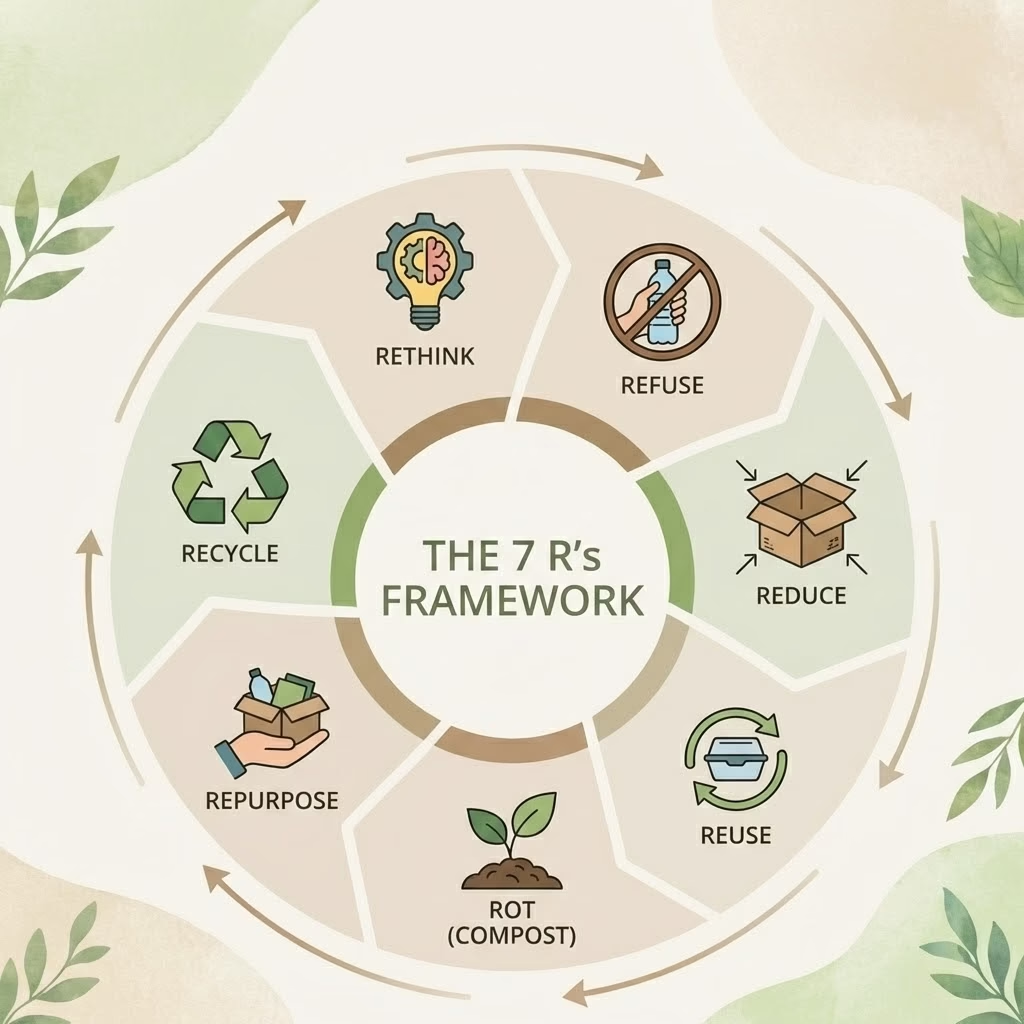 provides a practical lens for evaluating how materials are designed, used, and recovered across their entire lifecycle.
- Reduce focuses on minimizing material use without compromising performance. In fiber-based packaging, this often takes the form of lightweighting, optimized structural design, and the removal of unnecessary layers. Molded fiber packaging, for example, can be engineered to provide strength and protection using less material than traditional plastic formats.
- Reuse extends the life of packaging by designing products that can withstand multiple use cycles. Durable molded fiber systems and fiber-based trays are increasingly being used in returnable or refill models, particularly in closed-loop environments such as food service, logistics, and institutional settings.
- Recycle remains a critical pillar, especially for paper and fiber materials that already benefit from established collection and processing systems. Designing packaging as mono-material fiber products improves recovery rates and reduces contamination, enabling fibers to circulate through multiple life cycles before degradation.
- Rethink challenges designers and manufacturers to reconsider packaging from the ground up. This includes designing for compostability, simplifying material compositions, and aligning packaging function with realistic end-of-life outcomes. Rethinking also involves questioning whether certain packaging elements are necessary at all.
- Refuse emphasizes eliminating materials that undermine circularity. In practice, this often means avoiding plastic coatings, synthetic barriers, and mixed-material constructions that prevent recycling or composting. Refusing unnecessary complexity is a key step in improving overall system efficiency.
- Repurpose encourages secondary uses that extend the functional life of packaging beyond its original intent. Fiber-based packaging can often be reused for storage, protection, or organizational purposes, particularly in business-to-business contexts where durability and form stability are valued.
- Rot, or composting, represents the biological end-of-life pathway for plant-based materials. Compostable packaging made from biopulp or agricultural residues can break down under controlled composting conditions, returning organic matter to the soil. When supported by appropriate infrastructure, this pathway helps close the biological loop rather than shifting waste from one system to another.
Taken together, the 7 R’s provide a framework that aligns material choice with system-level outcomes. For plant-based and compostable packaging, this approach highlights that sustainability is not defined by a single attribute, but by how well materials move through cycles of use, recovery, and regeneration.
Industry Shift: How Packaging Systems Are Evolving
The shift toward sustainable packaging is no longer limited to niche applications or pilot projects. Across industries, companies are reassessing material choices in response to environmental targets, regulatory pressure, and changing customer expectations. Compostable and plant-based packaging has moved into mainstream consideration, particularly in sectors such as food and beverage, e-commerce, consumer goods, and electronics.
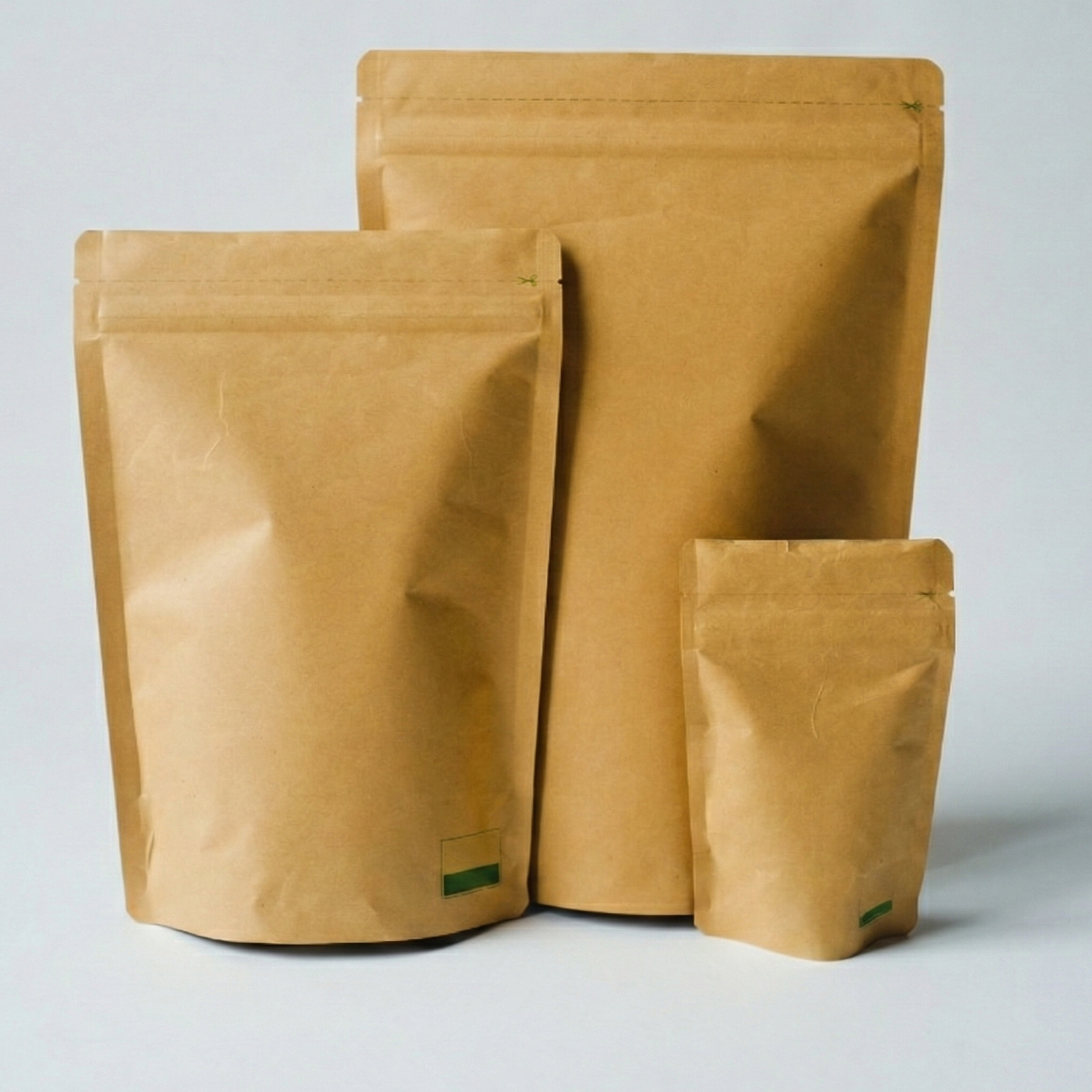
Market growth reflects this transition. Compostable packaging and molded fiber solutions are expanding at steady rates, driven by restrictions on single-use plastics, extended producer responsibility frameworks, and corporate sustainability commitments. Brands are increasingly setting material targets that prioritize recyclability, compostability, or renewable content, which in turn is accelerating investment in fiber-based and biopulp technologies.
Innovation has played a key role in this shift. Molded fiber packaging has evolved from simple cushioning applications to high-performance formats capable of replacing plastic trays, clamshells, and protective inserts. Advances in tooling, fiber blends, and forming techniques have improved strength, precision, and scalability, making plant-based materials viable across a broader range of use cases.
This transition is also reshaping supply chains. Packaging decisions now influence sourcing strategies, manufacturing processes, and end-of-life partnerships. As sustainable materials move from alternatives to expectations, they are becoming embedded within standard product development and procurement practices.
Economic Impact: Compostable Materials in a Net-Zero Transition
The move toward plant-based and compostable packaging is closely linked to broader economic shifts associated with climate commitments and net-zero targets. Packaging materials contribute to lifecycle emissions, and reducing their carbon intensity has become a practical lever for lowering overall environmental impact.
Plant-based materials offer advantages within this context. Because they are derived from renewable biomass, they can support lower-carbon production models, particularly when combined with responsible sourcing and efficient manufacturing. Compostable materials also create opportunities for biological material loops, where packaging returns to the soil rather than accumulating as waste.
Global trade and market access further reinforce this trend. As sustainability standards become more influential in international markets, manufacturers that can supply low-carbon, fiber-based packaging gain a competitive advantage. Recent trade developments expanding access between major economies have increased the scale at which sustainable packaging solutions can be produced and distributed, supporting investment, innovation, and cost reduction.
The economic implications extend beyond packaging alone. Growth in compostable and fiber-based materials supports agricultural value chains, rural employment, and green manufacturing. As part of a broader circular bioeconomy, these materials contribute to economic models that decouple growth from resource depletion and emissions.
Challenges and System-Level Considerations
Despite clear progress, sustainable packaging is not without challenges. Compostability depends heavily on access to appropriate waste collection and processing infrastructure, which varies widely by region. Without proper systems in place, compostable packaging may fail to deliver its intended environmental benefits.
Cost and scalability remain important considerations, particularly for small and medium-sized manufacturers. While prices for plant-based materials are becoming more competitive, they can still exceed those of conventional plastics in some applications. Achieving scale requires coordinated action across material suppliers, packaging producers, brands, and waste management systems.
There is also a need for clarity and consistency. Misleading claims and unclear labeling can undermine trust and slow adoption. Standards, certification, and transparent communication play a critical role in ensuring that compostable and recyclable packaging performs as intended within real-world systems.
These challenges highlight an important point. Sustainable packaging is not a single-material solution, but a system-level effort that requires alignment between design, infrastructure, and behavior.
Conclusion: Designing Packaging for Circular & Biological Cycles
The evolution from Reduce, Reuse, Recycle to the expanded 7 R’s reflects a deeper shift in how sustainability is understood. Rather than focusing solely on waste management, the framework emphasizes prevention, material intelligence, and alignment with natural systems.
For packaging, this shift places material choice at the center of the conversation. Plant-based, fiber-derived, and compostable materials offer practical pathways toward circular and biological cycles when they are designed, used, and recovered correctly. They enable packaging to move beyond disposal and toward regeneration.
As industries work toward net-zero goals, sustainable packaging will continue to play a meaningful role. The most effective solutions will not be defined by a single attribute, but by how well materials perform across their entire lifecycle. The 7 R’s provide a useful lens for making these decisions, helping designers, manufacturers, and brands move from managing waste to designing systems that work with the environment rather than against it.